Description
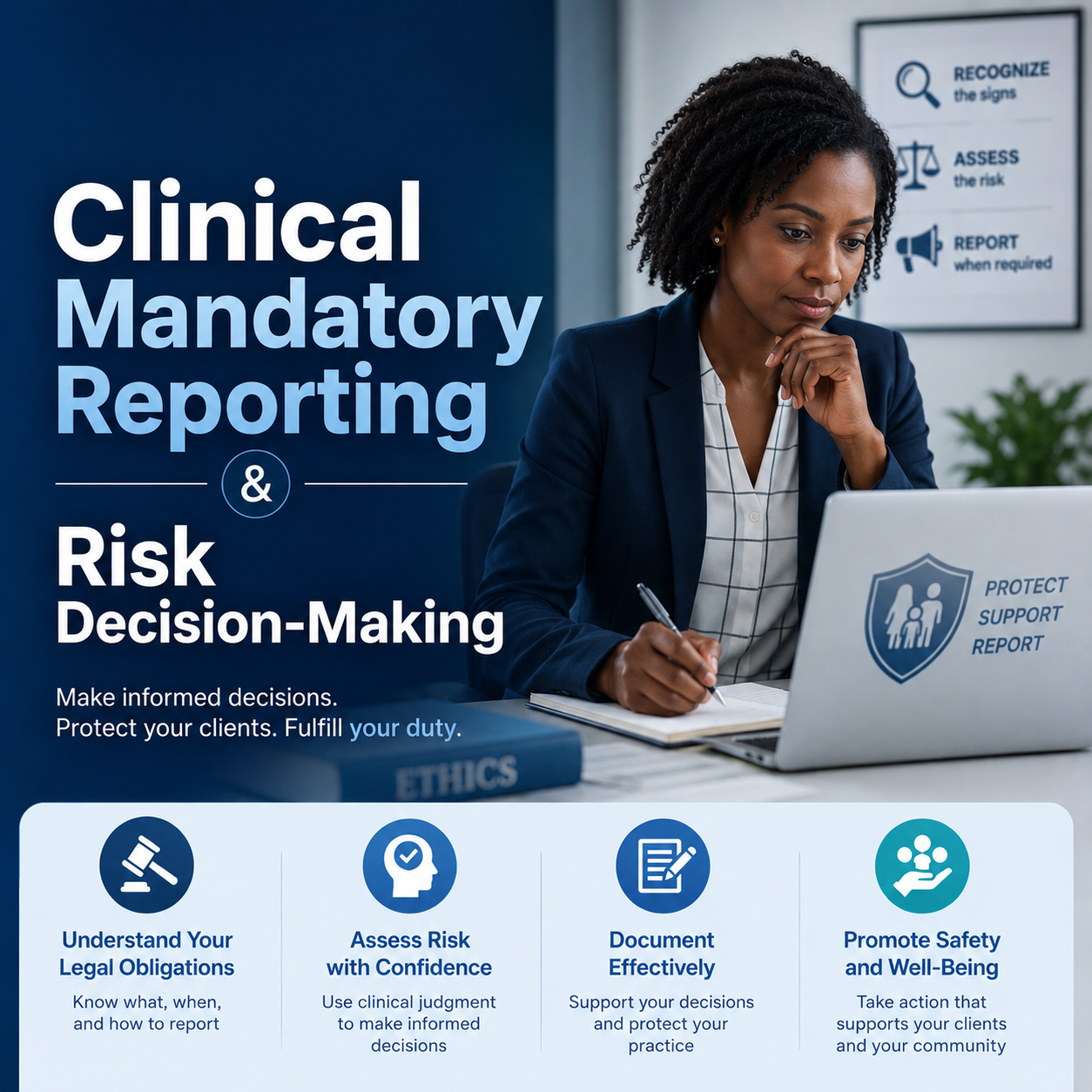
Clinical Mandatory Reporting & Risk Decision-Making
The Clinical Mandatory Reporting & Risk Decision-Making course is designed to provide social workers and other mental health professionals with comprehensive knowledge and understanding of their legal and ethical obligations regarding the reporting of child abuse, elder abuse, and domestic violence. This course aims to equip social workers and other mental health professionals with the necessary skills and competencies to identify and respond appropriately to situations where mandatory reporting is required.
There are no specific prerequisites for this course. It is open to social work professionals and other mental health professionals, students, and individuals interested in gaining knowledge and skills related to social work and mental health professional ethics.
Course Objectives:
-
Understand, describe, and explain the legal and ethical frameworks surrounding mandatory reporting for social workers and other mental health professional.
-
Identify, describe, and explain the signs, symptoms, and risk factors associated with child abuse, elder abuse, and domestic violence.
-
Develop the ability to assess and evaluate situations to determine the need for mandatory reporting.
-
Familiarize yourself with the reporting procedures and protocols specific to different jurisdictions. (How to know where to look)
-
Enhance communication skills to effectively engage with clients, colleagues, and relevant authorities in reporting cases.
-
Recognize the impact of mandatory reporting on social work and other mental health professional practices and client relationships.
-
Explore the ethical dilemmas and considerations that may arise in the context of mandatory reporting.
-
Develop strategies for self-care and managing the emotional challenges associated with mandatory reporting.
Outline:
Introduction and Overview
Types of Abuse and Neglect
Signs and indicators
Assessing and Evaluating Risk
Reporting Procedures and Documentation
Ethical Dilemmas and Considerations
Impact on Social Work Practice
Self-Care and Emotional Resilience
Case Studies and Practical Application
Conclusion and Integration
Questions and Answers
Closing and Evaluation
Lead Trainer

Audience
Psychologists, Social Workers, Psychotherapists, MFTs, LPCs, graduate-level Counselors, and any other mental health professionals/providers.
Certificates will be awarded after completion of the full Webinar and course evaluation.
Radiant Sunshine, #1403, is approved to offer social work continuing education by the Association of Social Work Boards (ASWB) Approved Continuing Education (ACE) program. Organizations, not individual courses, are approved as ACE providers. State and provincial regulatory boards have the final authority to determine whether an individual course may be accepted for continuing education credit. Radiant Sunshine maintains responsibility for this course. ACE provider approval period: 2/28/23 to 2/28/2026
Find out whether your state or province accepts ACE approval.
Approved Continuing Education Provider (ACEP):
Radiant Sunshine has been approved by NBCC as an Approved Continuing Education Provider, ACEP No. 7371. Programs that do not qualify for NBCC credit are clearly identified.
Select your state to find continuing education requirements.
Refund Policy: No refund will be given for the purchase of any course or webinar.
We accommodate persons with disabilities. Please email [email protected] for more information if disability accommodations are needed.
For more information, contact: [email protected]




Reviews
There are no reviews yet.